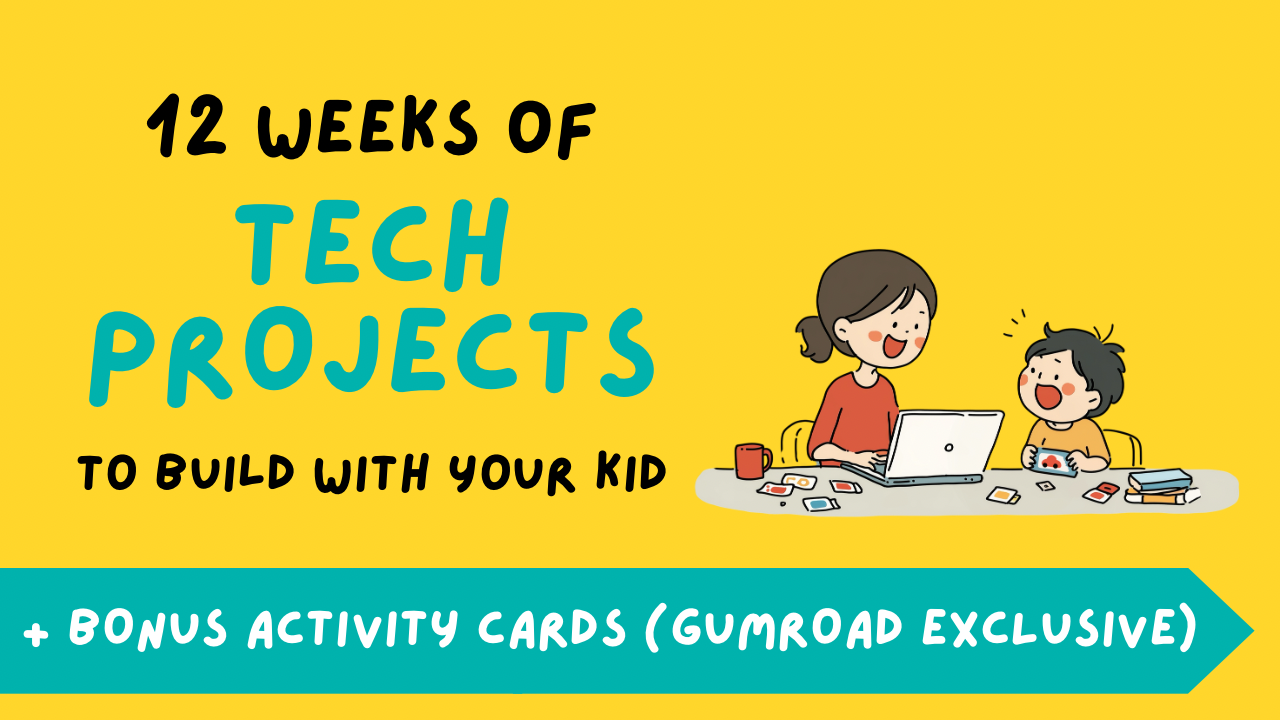
My son was two and a half when he built his first browser game. He couldn't read. He couldn't type. He couldn't tie his shoes. But he could sit next to me at the laptop and say:
"Make a red car game! Make it jump!"
So I typed his words into an AI chatbot. A red car appeared on screen. He pressed the space bar, and it jumped. He was overjoyed. Then he said: "Make it go faster. Can we make it a digger?"
He was designing. He was iterating. He was two.
The thing nobody tells dev parents
We know computational thinking matters. We know it's not just syntax, but how you break down problems, spot patterns, and think in systems. We do it every day.
But when it comes to our own kids, we freeze. We think: they're too young. They need to learn to read first. I'll teach them Python when they're eight.
Here's what I've learned: there's no reason to wait. The neural pathways for sequential reasoning, pattern recognition, conditional logic — those are forming RIGHT NOW, between ages 2 and 6. Your kid is already doing computational thinking when they sort their toys by color or figure out that pushing a button makes a sound.
So I wrote the curriculum I couldn't find
I wanted hands-on activities (physical, messy, real), AI-assisted game building (the kid directs, the parent types), actual CS concepts (not watered-down nonsense), and a structure a tired parent could follow without prep.
It didn't exist. So I built it.
How it works
12 weeks. One computational thinking concept per week. 15–30 minutes a day.
Mon–Tue: Hands-on activities. No screens. Build sequences with snack ingredients. Sort toys into categories. Create cause-and-effect chain reactions with dominos and ramps.
Wed: Build a browser game with AI. Kid describes, you type. The game teaches that week's concept.
Thu: Remix day. Kid changes the game — different colors, new rules, harder levels.
Fri: Kid "teaches" the concept to a stuffed animal, a sibling, or you. If they can explain it, they own it.
The 12 weeks
Each week builds on the last, but any week works standalone.
What you need
- A curious kid (ages 2–6)
- Any device with an AI chatbot (Claude, ChatGPT, Gemini — all work)
- 15–30 minutes a day
- Zero coding experience. Seriously. Zero.
What you don't need
- A computer science degree
- Expensive toys or robot kits
- Your kid to sit still for an hour
- Screen time guilt
About the author
I'm Mei. 12 years as a software engineer, master's in CS, currently a stay-at-home mom. My most joyous accomplishment so far is helping my little guy explore, learn, and build things he's interested in. If you've felt something similar, I made this for you.
Screen time they made > screen time they watched.